

Southern California's weather presents unique issues for concrete structures. From a reasonably competitive standpoint, choosing a good experienced Commercial Cement Los Angeles partner ensures that typically the intense sun, paired with significant heat fluctuations, can guide to detrimental issues like cracking and heat curling. These types of problems not just bargain the structural integrity of commercial concrete slabs but furthermore impact operational efficiency and long-term servicing costs. As infrastructure ages and making demands evolve, preventative measures become increasingly important for businesses across various sectors inside the region. Responding to these issues proactively is crucial for safeguarding investments and guaranteeing the durability associated with facilities.
The growing awareness of sustainable in addition to resilient construction practices further amplifies the advantages of effective concrete piece protection strategies. Modern building codes plus industry standards create a greater emphasis in durability and longevity, driving the adoption of advanced strategies to mitigate tangible distress. This informative article is exploring the core principles behind preventing cracking and heat curling in Southern California's demanding environment, focusing on practical programs and long-term value.
Becoming familiar with these mechanisms is definitely paramount for any person mixed up in design, structure, or maintenance regarding commercial concrete slabs in the area. This knowledge allows stakeholders to produce informed decisions relating to material selection, structure methods, and continuing care – most contributing to lowered lifecycle costs plus enhanced operational reliability. The economic effects of neglecting these kinds of preventative measures are substantial, making aggressive management a noise investment.
The Core Fact & Operational Surroundings
Concrete, despite its strength, is susceptible in order to stress when subjected to temperature alters. This susceptibility manifests as two main concerns: cracking and heat curling. Breaking occurs when typically the internal stresses within the concrete surpass its tensile durability, often due in order to shrinkage throughout the curing process or too much loading. Heat styling, on the some other hand, results from differential thermal expansion – when one side of the piece heats up more than the additional, causing it to be able to bend and probably crack.
The specific problems in Southern California exacerbate problems. Inside Commercial concrete contractors in Los Angeles regarding long-term Commercial Cement Los Angeles performance, the rapid heat swings between day time and night, in addition to prolonged periods associated with intense sunlight, make significant thermal anxiety on concrete slabs. This is especially relevant for good sized, flat concrete areas commonly found on commercial settings this kind of as parking garages, loading docks, and industrial floors.
Effective elimination hinges on a multi-faceted approach covering proper mix design and style, reinforcement strategies, and careful construction practices. This involves understanding the behavior of concrete floor under various environment conditions and employing techniques to control stress and lessen thermal gradients. Neglecting these factors can cause costly repairs and disruptions to functions. Appropriate planning is the cornerstone of durable concrete infrastructure.
- Mix Design Concerns: The particular proportioning of concrete, aggregates, and normal water significantly influences concrete's shrinkage and warmth sensitivity. Utilizing ideal admixtures can lessen water demand and improve workability, minimizing cracking potential.
- Reinforcement Outlining: Tactical placement of steel reinforcement helps spread stresses within the concrete slab, improving its resistance to be able to cracking caused by shrinking or thermal growth. The size, spacing, and type involving reinforcement must end up being carefully calculated established on the expected loads and environmental conditions.
- Curing Procedures: Proper solving – maintaining enough moisture and temperatures throughout the initial phases of hydration – is important for lessening shrinkage cracking. This specific can involve strategies such as ponding, wet coverings, or maybe the use of solving compounds.
Economic, Technical & Regional Specifics
The monetary implications of concrete floor cracking and high temperature curling are considerable. Repairs can variety from minor fixing to extensive piece replacement, leading to considerable downtime and detailed expenses. The expense of these kinds of repairs can quickly escalate, particularly in big commercial facilities where a compromised slab can disrupt company activities.
Technically, the habits of concrete in thermal stress is governed by rules of material science and even structural mechanics. Heat expansion coefficients fluctuate based on the concrete mix and aggregate sort. Understanding these coefficients allows engineers in order to predict the level of thermal worries and design ideal mitigation measures. Regional variations in climate – such since areas with increased average temperatures or perhaps more extreme temp fluctuations – require tailored design approaches.
With regard to projects in El monte, consideration should get given to the prevalence of seismic task. For concrete contractors Los Angeles making an investment in professional Commercial Concrete Are usually, when not directly linked to cracking and temperature curling, seismic tons can exacerbate existing vulnerabilities in concrete slabs. Therefore, a holistic approach to structural design that addresses both thermal and seismic stresses is usually essential for making sure long-term durability and safety.
Common Stumbling blocks, Misconceptions & Exactly what Most People Obtain Wrong
A common belief is the fact that simply making use of a higher power concrete mix may automatically prevent breaking and heat curling. While strength will be important, it doesn't address the underlying reasons behind stress. Some sort of high-strength concrete piece could crack when the stresses surpass its capacity.
Another regular mistake is insufficient attention to details during construction. Incorrect formwork, insufficient gerüttel, or inadequate solving can all contribute to cracking and additional defects. These issues often arise by a lack associated with experienced personnel or perhaps a failure to adhere to recognized quality control procedures.
Several projects overlook the importance of enlargement joints. These joints allow for movements in the concrete slab because of thermal development and contraction, stopping stress buildup that can result in great. Proper placement and even spacing of growth joints are very important for long-term durability, specially in large slabs.
Sensible Decision Framework & Long-Term Strategic Value
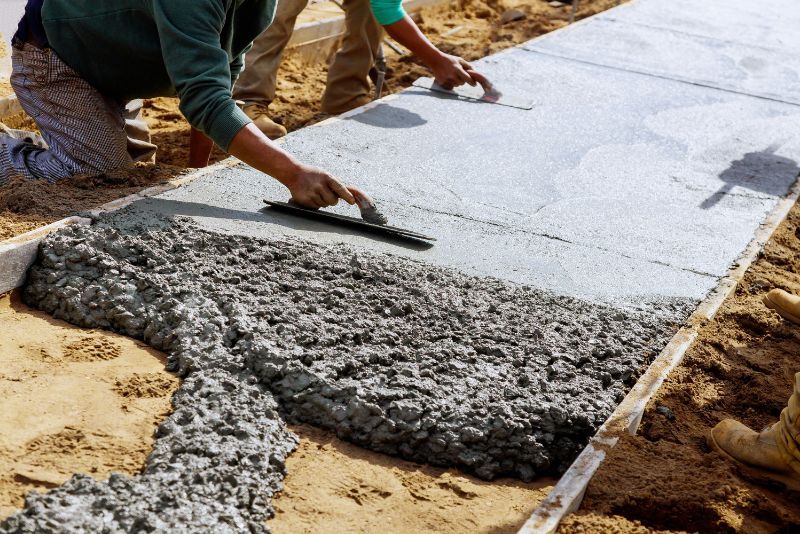
An affordable decision framework for preventing cracking in addition to heat curling involves a systematic examination of project demands, site conditions, plus budget constraints. When developing an respected Commercial Concrete Los Angeles strategy, this kind of begins with a detailed geotechnical investigation in order to understand the dirt properties and likelihood of settlement. Next, reveal structural analysis ought to be performed to determine the anticipated tons and thermal worries on the concrete floor slab.
Based on this particular analysis, appropriate design and style measures can always be selected. These may possibly include optimizing the particular mix design, integrating reinforcement detailing, employing effective curing procedures, and strategically inserting expansion joints. Selecting materials should likewise consider their cold weather properties and level of resistance to cracking.
Buying protective measures for solid slabs is simply not simply a cost; that represents a long lasting strategic value. By simply minimizing the threat of costly repair and disruptions to be able to operations, these measures contribute to increased asset management, increased operational efficiency, plus reduced lifecycle charges. A durable cement infrastructure is some sort of fundamental component regarding a resilient plus sustainable commercial center.
Ultimately, preventing cracking in addition to heat curling found in Southern California's cement slabs needs a positive, informed approach. That demands a comprehension involving the interplay involving material properties, structural mechanics, and environmental conditions. By taking on best practices in addition to prioritizing long-term sturdiness, businesses can protect their investments in addition to ensure the continued dependability of their services for years to be able to come.